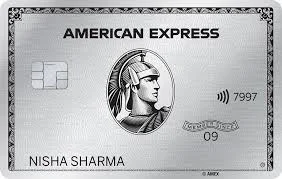
American Express ยท 2026 Edition

Best American Express Bank Credit Card Ranked & Reviewed By CreditXpertis

Expert breakdown of every major Amex card โ€” premium travel, cash back, dining rewards, Delta SkyMiles, Hilton Honors, and Membership Rewards โ€” with real pros, cons, and who each card is actually best for.

Amex
Premium Card Leader
25+
Consumer Cards
2026
Up to Date
100%
Unbiased
Card

American Express Platinum ยฎ Premium Travel ()

โ˜…โ˜…โ˜…โ˜…โ˜… (4.6/5)
Claimed Value $3,500+
Lounge Value $850+
Enrollment Req. Manual
Penalty APR 29.99%
Apply Now
BEST FOR: Best for Luxury Travel & Lounges
Unlock <strong style='color:#00e676'> $3,500+ in annual value</strong> . Incredible for luxury travel, but requires strict coupon management to avoid losing money.
BEST FOR: Best for Luxury Travel & Lounges
Unlock <strong style='color:#00e676'> $3,500+ in annual value</strong> . Incredible for luxury travel, but requires strict coupon management to avoid losing money.

American Express Bank Credit Card Lineup Overview

American Express is one of the most iconic financial brands in the world and the undisputed leader in premium credit cards. While Chase and Capital One compete aggressively in the mid-tier rewards space, Amex dominates the high end โ€” from the legendary Platinum Card with its $895 annual fee and 1,550+ airport lounge network to the Gold Card that foodie cardholders swear by. Amex also offers excellent cash back options, airline-specific Delta SkyMiles cards, and hotel co-brands with Hilton Honors and Marriott Bonvoy.

American Express organizes its consumer card portfolio into six main categories:

  1. Membership Rewards Cards (Charge Cards) โ€” The Platinum ($895/year), Gold ($325/year), and Green ($150/year) cards that earn transferable Membership Rewards points redeemable through 20+ airline and hotel transfer partners. These are technically charge cards, meaning the balance is generally due in full each month (with Pay Over Time options available).
  2. Cash Back Credit Cards โ€” The Blue Cash Preferred (6% groceries, $95/year after first year) and Blue Cash Everyday (3% groceries/gas/online, $0/year) for people who want straightforward cash back with no points complexity.
  3. Delta SkyMiles Cards โ€” Co-branded cards ranging from the no-annual-fee Delta Blue to the premium Delta Reserve, earning SkyMiles on every purchase plus Delta-specific perks like free bags, companion certificates, and Sky Club access.
  4. Hilton Honors Cards โ€” Hotel co-branded cards earning Hilton points with perks like automatic Gold or Diamond elite status, free night awards, and resort credits.
  5. Marriott Bonvoy Cards โ€” The Marriott Bonvoy Brilliant and Marriott Bonvoy card earning Marriott points with elite status and free night certificates.
  6. Business Cards โ€” Business versions including the Business Platinum, Business Gold, Blue Business Plus, and Blue Business Cash.

The backbone of the Amex ecosystem is Membership Rewards โ€” one of the most valuable transferable points currencies in the credit card world. With 20+ airline and hotel transfer partners including Delta SkyMiles, Air France/KLM Flying Blue, ANA Mileage Club, Singapore Airlines KrisFlyer, British Airways Avios, Marriott Bonvoy, and Hilton Honors, Amex points consistently deliver 1.5-2+ cents per point in value when transferred strategically.

Card 1: The Platinum Cardยฎ from Amex

At a Glance - Overview

Annual Fee$895
Best ForFrequent travelers who want the best lounge access and premium perks in the market

The Platinum Card from American Express Bank is the most premium consumer credit card in the United States and the benchmark against which all other luxury travel cards are measured. With a $895 annual fee (increased from $695 in September 2025), the card delivers over $3,500 in annual statement credits, the largest airport lounge network of any card (1,550+ lounges including Centurion Lounges, Delta Sky Clubs, and Priority Pass), automatic Hilton Gold and Marriott Bonvoy Gold elite status, and 5X Membership Rewards points on flights and prepaid hotels through Amex Travel.

The card’s annual credits include: $600 in prepaid hotel credits through Fine Hotels + Resorts and The Hotel Collection ($300 semi-annually), $400 in Resy dining credits ($100 quarterly at 10,000+ restaurants), $300 for Equinox fitness membership, $200 in Uber Cash ($15/month + $20 in December), $200 for airline incidental fees, $200 for Oura Ring, $155 for Walmart+ membership, up to $120 for Global Entry/TSA PreCheck, and $100 for Saks Fifth Avenue (ending June 2026). Additional perks include complimentary Hilton Gold and Marriott Bonvoy Gold status (enrollment required), cell phone protection, comprehensive travel insurance, and access to Amex Concierge.

Expert Insight

Expert Insight: Don’t let the $200 Uber Cash go to waste if you don’t use rideshares! The $15 monthly credit applies to Uber Eats as well. Just order pickup once a month from a local restaurant to guarantee you extract that $200 value.

  • Current APR: This is a charge card โ€” balance generally due in full monthly (Pay Over Time feature available with variable APR)
  • Welcome Bonus: Up to 175,000 Membership Rewards points after spending $12,000 in first 6 months (offers vary; apply to see your personalized offer)
  • Foreign Transaction Fee: None

โœ“ Advantages

  • Over $3,500 in annual statement credits across travel, dining, entertainment, fitness, and lifestyle categories
  • Access to 1,550+ airport lounges โ€” the largest lounge network of any credit card, including exclusive Centurion Lounges, 10 Delta Sky Club visits/year, Priority Pass Select, and more
  • 5X points on flights booked directly with airlines or Amex Travel (up to $500,000/year) and prepaid hotels via Amex Travel
  • Welcome bonus up to 175,000 points (worth $1,750+ in travel) โ€” one of the highest in the market
  • Points transfer to 20+ airline and hotel partners at excellent ratios
  • Complimentary Hilton Gold and Marriott Bonvoy Gold elite status (enrollment required)
  • No foreign transaction fees
  • Comprehensive travel insurance: trip delay/cancellation, baggage, car rental, cell phone protection
  • Fine Hotels + Resorts benefits: room upgrades, free breakfast, late checkout, on-property credits
  • $400/year in Resy dining credits across 10,000+ US restaurants

โœ• Drawbacks

  • $895 annual fee โ€” the highest among mainstream consumer cards (up from $695 in 2025)
  • Many credits are "use it or lose it" in monthly/quarterly increments โ€” requires active management to maximize
  • Credits are tied to specific brands (Resy restaurants, Equinox, Uber, Walmart+, Oura) โ€” if you don’t use these services, the credits have zero value
  • Only 1X points on non-bonus purchases โ€” weak base earning rate compared to 2X cards
  • Centurion Lounge guest access now requires $75,000+ annual spending on the card
  • $195 per additional Platinum cardholder (authorized user)
  • Charge card structure means balance generally due in full โ€” not ideal for financing purchases
  • Saks Fifth Avenue credit ending June 2026

Who Should Apply

The Platinum Card justifies its $895 fee for frequent travelers who can realistically use the $600 hotel credit, $400 Resy dining credit, $200 Uber Cash, $200 airline fee credit, and airport lounge access. If you fly 6+ times per year, stay at premium hotels, and dine at Resy-affiliated restaurants regularly, the card’s annual benefits can exceed $2,000+ in genuine value โ€” making the net cost effectively negative. The welcome bonus alone (up to 175,000 points worth $1,750+ in travel) can justify the first-year fee several times over.

Who Should Not Apply

If you travel fewer than 4 times per year, the hotel credits and lounge access won’t deliver enough value to justify the fee. If you don’t use Uber, Equinox, Walmart+, or Oura, large chunks of the credit portfolio are worthless to you. If you want strong everyday earning beyond flights and hotels, the Gold Card ($325/year) with its 4X on dining and groceries is a far better value for daily spending. And if the $895 upfront annual fee causes budget strain, you’re better served by a mid-tier card like the Capital One Venture X ($395) or Chase Sapphire Reserve ($550).

Expert Review by Suraj Jha | Updated April 2026

Card 2: American Expressยฎ Gold Card

At a Glance - Overview

Annual Fee$325
Best ForFoodies who want the best dining and grocery rewards card in America

The American Express Gold Credit Card is widely regarded as the single best credit card for dining and grocery spending. It earns 4X Membership Rewards points at restaurants worldwide (up to $50,000/year) and 4X at U.S. supermarkets (up to $25,000/year), 3X on flights booked directly with airlines or Amex Travel, 2X on prepaid hotels through Amex Travel, and 1X on everything else.

The card includes over $424 in annual statement credits: $120 in Uber Cash ($10/month), $120 dining credit ($10/month at Grubhub, The Cheesecake Factory, Five Guys, Wine.com, Goldbelly), $100 Resy dining credit ($50 semi-annually), and $84 in Dunkin’ credit ($7/month). Up to 5 additional cardholders can be added at no extra cost. Points transfer to 20+ airline and hotel partners, making this one of the most valuable mid-tier rewards cards available.

Expert Insight

Expert Insight: The 4X multiplier on U.S. Supermarkets is incredibly powerful, but remember that Amex does NOT count wholesale clubs (Costco, Sam’s Club) or superstores (Walmart, Target) as supermarkets. Buy your groceries at dedicated grocers to maximize this card.

  • Current APR: Charge card โ€” balance generally due in full monthly (Pay Over Time option available)
  • Welcome Bonus: Up to 100,000 Membership Rewards points after spending $6,000 in first 6 months (offers vary)
  • Foreign Transaction Fee: None

โœ“ Advantages

  • 4X points on dining worldwide and U.S. supermarkets โ€” the highest earn rate in these categories among major cards
  • Over $424 in annual credits (Uber Cash, dining, Resy, Dunkin’) โ€” more than covers the $325 annual fee
  • Points transfer to 20+ airline and hotel partners โ€” same elite transfer network as the Platinum
  • Welcome bonus up to 100,000 points โ€” strong first-year value
  • Up to 5 additional cardholders at no extra cost
  • No foreign transaction fees
  • 3X on flights booked directly with airlines or Amex Travel
  • No preset spending limit โ€” adapts to your spending and payment history
  • Hotel Collection access with $100 on-property credit on 2+ night stays

โœ• Drawbacks

  • $325 annual fee (increased from $250 in late 2024)
  • Credits are monthly/semi-annual increments at specific brands โ€” easy to forget and lose value
  • 4X grocery cap at $25,000/year, 4X restaurant cap at $50,000/year โ€” then reverts to 1X
  • Only 1X on non-bonus categories โ€” weak for general spending
  • Charge card requires generally paying in full (Pay Over Time available but carries interest)
  • No airport lounge access
  • Grocery 4X excludes superstores like Walmart and Target

Who Should Apply

The Gold Card is a no-brainer for anyone who spends heavily on dining and groceries at U.S. supermarkets. A household spending $800/month on groceries and $500/month on restaurants earns roughly 62,400 Membership Rewards points per year from those two categories alone โ€” worth $624+ in travel when transferred to partners, and potentially much more with strategic redemptions. The annual credits ($424+) more than offset the $325 fee, making the card effectively free to hold before you even count the points earned. It pairs perfectly with the Platinum Card for travelers who want lounge access.

Who Should Not Apply

If you buy groceries primarily at Walmart, Target, or Costco, the 4X rate won’t apply to those purchases (they’re coded as superstores, not supermarkets). If you prefer simple cash back over managing a points program, the Blue Cash Preferred (6% at supermarkets) delivers more straightforward value for grocery spending. If you don’t use Uber, Grubhub, The Cheesecake Factory, Five Guys, or Dunkin’, the monthly credits lose their value. If you want strong general-purpose earning (not just dining/groceries), a flat-rate 2% card is better for non-bonus spending.

Expert Review by Suraj Jha | Updated April 2026

Card 3: American Expressยฎ Green Card

At a Glance - Overview

Annual Fee$150
Best ForTravelers and commuters who want Membership Rewards access at a moderate price

The Express Green Card is the entry point into Amex’s premium Membership Rewards ecosystem. It earns 3X points on all eligible travel purchases (flights, hotels, car rentals, cruises, campgrounds), 3X on transit (trains, taxis, rideshare, buses, tolls, parking), 3X at restaurants worldwide, and 1X on everything else. The card includes up to $209 annually in CLEAR Plus membership credits (enrollment required) โ€” which alone more than covers the $150 annual fee for frequent travelers.

Expert Insight

Expert Insight: The Green Card has a much broader definition of "Travel" than the Platinum or Gold. While Platinum requires you to book flights directly or use Amex Travel, the Green Card gives you 3X on Airbnbs, train tickets, parking garages, and third-party hotel bookings.

  • Current APR: Charge card โ€” balance generally due in full (Pay Over Time available)
  • Welcome Bonus: 40,000 Membership Rewards points after spending $3,000 in first 6 months
  • Foreign Transaction Fee: None

โœ“ Advantages

  • 3X on travel, transit, and restaurants โ€” broad earning across three major spending categories
  • Up to $209 CLEAR Plus membership credit โ€” more than offsets the $150 annual fee
  • Access to 20+ Membership Rewards transfer partners โ€” same network as Platinum and Gold
  • $150 annual fee โ€” most affordable entry to Amex’s Membership Rewards transfer ecosystem
  • No foreign transaction fees
  • No preset spending limit
  • Trip delay insurance, baggage insurance, car rental coverage, Global Assist Hotline

โœ• Drawbacks

  • $150 annual fee โ€” not free, though the CLEAR credit offsets it
  • 40,000-point welcome bonus is modest compared to Gold (100,000) and Platinum (up to 175,000)
  • Only 1X on non-bonus purchases โ€” weak base rate
  • No grocery bonus (Gold Card earns 4X at supermarkets)
  • No airport lounge access
  • Charge card โ€” balance generally due in full
  • CLEAR Plus is only useful if you travel through airports that have CLEAR lanes

Who Should Apply

The Green Card is perfect as a "starter" Amex card for people who want access to Membership Rewards transfer partners without committing to the Gold’s $325 or Platinum’s $895 annual fee. If you commute via public transit, use rideshare services, and dine out regularly, the 3X earning across travel, transit, and restaurants covers the categories where many young professionals spend the most. The CLEAR Plus credit makes the card effectively free for anyone who uses CLEAR at airports.

Who Should Not Apply

If you spend heavily on groceries, the Gold Card’s 4X at supermarkets is significantly more valuable. If you don’t use CLEAR Plus, the annual fee becomes harder to justify โ€” and the Chase Sapphire Preferred ($95/year) or Capital One Venture ($95/year) offer larger welcome bonuses and broader benefits at a lower price. If you want cash back simplicity, the Amex Blue Cash Everyday ($0/year) or Blue Cash Preferred ($95/year after first year) are better options.

Expert Review by Suraj Jha | Updated April 2026

Card 4: Blue Cash Preferredยฎ Card from American Express

At a Glance - Overview

Annual Fee$0 first year, $95/year after
Best ForFamilies who spend heavily on groceries and streaming

The Blue Cash Preferred Card is one of the highest-earning grocery cash back cards in the market. It earns 6% cash back at U.S. supermarkets (on the first $6,000/year in purchases, then 1%), 6% on select U.S. streaming subscriptions (Netflix, Hulu, Spotify, Pandora, and more), 3% at U.S. gas stations and on transit (taxis, rideshare, trains, buses, tolls, parking), and 1% on all other purchases. The card also includes a Disney Bundle streaming credit (enrollment required).

New cardholders may be eligible for up to $300 cash back after spending $3,000 in the first 6 months, a 0% intro APR on purchases and balance transfers for 12 months, and a $0 annual fee the first year ($95/year after).

Expert Insight

Expert Insight: If you max out the $6,000 annual grocery cap, you’ll earn $360 in cash back. Subtract the $95 annual fee, and you are still netting a pure $265 profit every year just by buying your groceries with this card.

  • Current APR: 19.49% โ€“ 28.49% variable (after 0% intro for 12 months)
  • Welcome Bonus: Up to $300 cash back after spending $3,000 in first 6 months (offers vary)
  • Foreign Transaction Fee: 2.7%

โœ“ Advantages

  • 6% cash back at U.S. supermarkets โ€” among the highest grocery earn rates available
  • 6% on select U.S. streaming subscriptions โ€” rare high earning on streaming
  • 3% on gas and transit โ€” solid for commuters and families
  • $0 annual fee first year ($95 after) โ€” risk-free first-year trial
  • 0% intro APR for 12 months on purchases and balance transfers
  • Up to $300 welcome bonus
  • Disney Bundle streaming credit (enrollment required)
  • Plan It feature to split large purchases into fixed monthly installments

โœ• Drawbacks

  • $95 annual fee after first year โ€” requires consistent grocery spending to justify
  • 6% grocery cap at $6,000/year โ€” reverts to 1% after (max $360/year in grocery cash back)
  • Grocery 6% excludes superstores (Walmart, Target) and wholesale clubs (Costco, Sam’s Club)
  • Only 1% on non-bonus purchases โ€” below the 1.5-2% flat-rate standard
  • 2.7% foreign transaction fee โ€” unsuitable for international use
  • Cash back earned as Reward Dollars โ€” redeemable only as statement credits or at Amazon checkout
  • Not a Membership Rewards card โ€” points cannot be transferred to travel partners

Who Should Apply

The Blue Cash Preferred is the best card for families who do most grocery shopping at traditional supermarkets (Kroger, Publix, Safeway, Stop & Shop, etc.) and subscribe to multiple streaming services. A family spending $500/month on supermarket groceries earns $360/year in grocery cash back alone โ€” more than enough to justify the $95 annual fee. Add in streaming, gas, and transit rewards, and the card can easily generate $500+/year in cash back. The 0% intro APR is a useful bonus for financing large purchases or transferring a balance.

Who Should Not Apply

If you buy groceries at Walmart, Target, or Costco, the 6% rate won’t apply โ€” you’ll earn just 1%. If your supermarket spending is under $200/month, the $95 annual fee erodes most of the benefit, and the free Blue Cash Everyday (3% at supermarkets) is a better fit. If you want travel rewards instead of cash back, the Gold Card ($325/year) earns transferable points worth more per dollar for travel redemptions. If you travel internationally, the 2.7% foreign transaction fee is a significant drawback.

Expert Review by Suraj Jha | Updated April 2026

Card 5: Blue Cash Everydayยฎ Card from American Express

At a Glance - Overview

Annual Fee$0
Best ForNo-fee cash back on groceries, gas, and online shopping

The Blue Cash Everyday Card is the no-annual-fee version of the Blue Cash family. It earns 3% cash back at U.S. supermarkets, 3% at U.S. gas stations, 3% on U.S. online retail purchases (each on up to $6,000/year per category, then 1%), and 1% on everything else. The card includes a Disney Bundle streaming credit (enrollment required), a 0% intro APR on purchases and balance transfers for 15 months, and a welcome offer of up to $200 cash back after spending $2,000 in the first 6 months.

Expert Insight

Expert Insight: The 3% back on "U.S. online retail purchases" is a massively underrated category. It applies to almost anything you buy through a web browser or app, making this an incredible free card for Amazon, clothing sites, and general web shopping.

  • Current APR: 19.49% โ€“ 28.49% variable (after 0% intro for 15 months)
  • Welcome Bonus: Up to $200 cash back after spending $2,000 in first 6 months (offers vary)
  • Foreign Transaction Fee: 2.7%

โœ“ Advantages

  • $0 annual fee โ€” zero cost to hold
  • 3% at supermarkets, gas stations, and online retail โ€” solid everyday category coverage
  • 0% intro APR for 15 months โ€” one of the longer intro periods among no-fee cards
  • Up to $200 welcome bonus
  • Disney Bundle streaming credit (enrollment required)
  • Good entry-level Amex card with upgrade path to Blue Cash Preferred

โœ• Drawbacks

  • Each 3% category capped at $6,000/year โ€” then drops to 1%
  • Only 1% on non-bonus purchases
  • 2.7% foreign transaction fee
  • Not a Membership Rewards card โ€” no travel transfer partners
  • Grocery 3% excludes superstores and wholesale clubs

Who Should Apply

The Blue Cash Everyday is ideal for moderate spenders who want bonus cash back on groceries, gas, and online shopping without paying an annual fee. It works well as a secondary card paired with a flat-rate 2% card for non-bonus purchases. The 15-month 0% intro APR is also valuable for financing large purchases or balance transfers. If your supermarket spending is under $200/month, the free Blue Cash Everyday often delivers more net value than the $95/year Blue Cash Preferred.

Who Should Not Apply

If you spend over $250/month at supermarkets, the Blue Cash Preferred’s 6% rate (after accounting for the $95 fee) earns more. If you shop primarily at Walmart or Target for groceries, the 3% won’t apply. If you want the highest possible no-fee earning rates, the Capital One Savor (3% on dining/groceries/entertainment) offers a broader category structure.

Expert Review by Suraj Jha | Updated April 2026

Card 6: Delta SkyMilesยฎ Gold American Express Card

At a Glance - Overview

Annual Fee$0 first year, then $150
Best ForRegular Delta flyers who want free bags and a companion certificate

The Delta SkyMiles Gold Amex Card is Delta’s mid-tier co-branded card and the most popular choice for regular Delta flyers. It earns 2X miles on Delta purchases, restaurants worldwide (including takeout and delivery), and at U.S. supermarkets, plus 1X on everything else. The card includes a first checked bag free on Delta flights (for cardholder and up to 8 companions), priority boarding, a Delta Main Cabin round-trip Companion Certificate after annual card renewal, 20% back on eligible in-flight Delta purchases, and 15% off when redeeming SkyMiles for award travel.

Expert Insight

Expert Insight: The 15% discount on SkyMiles award bookings is a game-changer. If a flight costs 50,000 miles, holding this card drops the price to 42,500 miles. Over a few flights, this benefit alone saves you tens of thousands of miles.

  • Current APR: 19.49% โ€“ 28.49% variable
  • Welcome Bonus: Up to 80,000 bonus miles after spending $2,000 in first 6 months (offers vary)
  • Foreign Transaction Fee: None

โœ“ Advantages

  • First checked bag free on Delta flights โ€” saves $35 each way ($70 round-trip) per person
  • Delta Companion Certificate after card renewal โ€” effectively a free round-trip domestic ticket (you pay just taxes/fees of $22-$250)
  • 2X miles on Delta, restaurants, and U.S. supermarkets
  • Welcome bonus up to 80,000 miles
  • 15% off Delta award travel when using SkyMiles
  • 20% back on eligible in-flight purchases (up to $300 in credits per year)
  • $0 annual fee first year
  • No foreign transaction fees
  • Priority boarding on Delta flights
  • Up to $200 Delta flight credit annually when you spend $10,000

โœ• Drawbacks

  • $150 annual fee after first year
  • SkyMiles are locked into the Delta ecosystem โ€” cannot transfer to non-Delta partners
  • Only 1X on non-bonus categories โ€” weak general earning rate
  • Companion Certificate restricted to domestic, Caribbean, and Central American routes
  • No airport lounge access
  • Only valuable if you regularly fly Delta โ€” switching airlines kills the card’s value

Who Should Apply

If you fly Delta 3+ times per year and check bags, the free checked bag benefit alone saves $210+/year (for a solo traveler on 3 round trips) โ€” more than justifying the $150 annual fee after the first year. The Companion Certificate adds another $200-$500+ in value depending on the route. For Delta loyalists, this card is practically free money. The $0 first-year fee makes it risk-free to try.

Who Should Not Apply

If you don’t fly Delta regularly, the SkyMiles earned on this card have limited value compared to flexible Membership Rewards points from the Gold or Green cards. If you want lounge access, you’ll need the Delta Platinum ($350/year) or Reserve. If you primarily want cash back and don’t care about airline perks, a card like the Savor or Quicksilver is more practical.

Expert Review by Suraj Jha | Updated April 2026

Card 7: Delta SkyMilesยฎ Blue American Express Card

At a Glance - Overview

Annual Fee$0
Best ForOccasional Delta flyers who want to earn SkyMiles with no commitment

The Delta SkyMiles Blue is Delta’s entry-level no-annual-fee card. It earns 2X miles on dining (restaurants worldwide, takeout and delivery) and Delta purchases, and 1X on everything else. The card includes 20% back on eligible in-flight purchases and no foreign transaction fees. It does not include free checked bags, priority boarding, or a companion certificate โ€” those require the Gold or higher tier.

Expert Insight

Expert Insight: Because this card has no annual fee and no foreign transaction fees, it is a perfect card to keep in your wallet long-term to ensure your Delta SkyMiles never expire, even if you only fly Delta once every few years.

  • Current APR: 19.49% โ€“ 28.49% variable
  • Welcome Bonus: 10,000 bonus miles after spending $1,000 in first 6 months
  • Foreign Transaction Fee: None

โœ“ Advantages

  • $0 annual fee โ€” costs nothing to hold
  • 2X miles on restaurants and Delta purchases
  • No foreign transaction fees
  • 20% back on eligible in-flight purchases
  • SkyMiles never expire
  • Good starter card to build SkyMiles balance

โœ• Drawbacks

  • No free checked bags โ€” the most valuable perk on the Gold card is absent here
  • No companion certificate
  • No priority boarding
  • 10,000-mile welcome bonus is very modest
  • Only 1X on non-dining, non-Delta purchases

Who Should Apply

The Blue card is for occasional Delta flyers who want a free way to earn SkyMiles on restaurant spending without committing to an annual fee. If you fly Delta 1-2 times per year and carry on only (no checked bags), the free Blue card lets you accumulate miles at no cost. It’s also a good "keep in wallet" card for the 20% in-flight savings and no foreign transaction fees when traveling abroad.

Who Should Not Apply

If you fly Delta 3+ times per year and ever check bags, the Gold card’s $150 annual fee is easily justified by the free bag benefit alone โ€” and the companion certificate adds massive value on top. If you want strong general-purpose dining rewards, the Amex Gold (4X at restaurants) or Capital One Savor (3% on dining) earn more per dollar.

Expert Review by Suraj Jha | Updated April 2026

American Express Card Comparison Table

Card NameAnnual FeeBest Earn RateBest For
The Platinum Card®$8955X flights & prepaid hotels via Amex TravelPremium travel, lounge access, luxury perks
Amex ® Gold Card$3254X restaurants & U.S. supermarketsDining & grocery rewards, foodies
American Express® Green Card$1503X travel, transit & restaurantsBudget-friendly Membership Rewards entry
Blue Cash Preferred®$0 first yr / $95 after6% U.S. supermarkets & streamingGrocery & streaming cash back
Blue Cash Everyday®$03% supermarkets, gas & online retailNo-fee everyday cash back
Delta SkyMiles® Gold$0 first yr / $150 after2X Delta, dining & supermarketsRegular Delta flyers, free bags
Delta SkyMiles® Blue$02X dining & Delta purchasesOccasional Delta flyers, no-fee SkyMiles

*All APRs, rewards rates, annual fees, and terms are subject to change. Terms apply to all Amex benefits and offers. Visit americanexpress.com for current rates and fees. Welcome offers vary and you may not be eligible. Enrollment may be required for select benefits.

Understanding Amex Membership Rewards Points

Membership Rewards is Express’s proprietary points currency and one of the most valuable point systems in the credit card world. Points are earned on the Platinum, Gold, Green, EveryDay, and Blue Business Plus cards, and can be transferred to an extensive network of airline and hotel loyalty programs.

Key Transfer Partners

Amex Membership Rewards points transfer at a 1:1 ratio to most partners, including: Delta SkyMiles, Air France/KLM Flying Blue, British Airways Avios, ANA Mileage Club, Singapore Airlines KrisFlyer, Virgin Atlantic Flying Club, Avianca LifeMiles, Emirates Skywards, Cathay Pacific Asia Miles, JetBlue TrueBlue, and Hilton Honors (1:2 ratio). Hotel partners include Marriott Bonvoy (1:1) and Hilton Honors (1:2). This is the broadest transfer partner network in the U.S. credit card market.

Redemption Values (Best to Worst)

  • Transfer to airline/hotel partners (best): Consistently delivers 1.5-2.5+ cents per point when transferred strategically. Sweet spots include Delta domestic flights via SkyMiles, ANA first class via Virgin Atlantic, and Hilton stays via Hilton Honors.
  • Book through Amex Travel (good): Points are worth 1 cent each for flights, or more for prepaid hotels through Fine Hotels + Resorts.
  • Statement credits (acceptable): Points can be redeemed at 0.6-1 cent each as statement credits.
  • Gift cards or Amazon (poor): Typically 0.5-0.7 cents per point. Avoid these redemptions.

Which Amex Cards Earn Membership Rewards

Only certain Amex cards earn transferable Membership Rewards points: the Platinum Card, Gold Card, Green Card, EveryDay Preferred, EveryDay, and Blue Business Plus. The Blue Cash Preferred, Blue Cash Everyday, Delta SkyMiles cards, and Hilton cards earn their own separate currencies (Reward Dollars, SkyMiles, or Hilton Honors points respectively) that cannot be transferred between programs. This distinction is critical when choosing your Amex card strategy.

American Express Bank Credit Card Score Requirements by Card Type

American Express generally requires good to excellent credit for most of its cards, though approval depends on multiple factors beyond credit score alone, including income, existing Amex relationship, and overall debt load.

Excellent Credit (740+)

  • The Platinum Card โ€” $895/year, premium travel
  • Amex Gold Card โ€” $325/year, dining & groceries
  • Delta SkyMiles Reserve โ€” $650/year, premium Delta perks
  • Hilton Honors American Express Aspire โ€” $550/year, premium Hilton

Good Credit (670-739)

  • American Express Green Card โ€” $150/year, travel & transit
  • Blue Cash Preferred โ€” $0 first year / $95 after, grocery cash back
  • Delta SkyMiles Gold โ€” $0 first year / $150 after, Delta rewards
  • Delta SkyMiles Platinum โ€” $350/year, Sky Club access
  • Hilton Honors American Express Surpass โ€” $150/year

Fair to Good Credit (640-669)

  • Blue Cash Everyday โ€” $0/year, everyday cash back
  • Delta SkyMiles Blue โ€” $0/year, entry-level SkyMiles
  • Hilton Honors Amex Card โ€” $0/year
  • EveryDay Credit Card โ€” $0/year, Membership Rewards entry

American Express offers a pre-approval check through its “Check for Offers” tool at americanexpress.com/prequalify that uses a soft pull โ€” no credit score impact. However, Amex has a notable limitation: the “once-per-lifetime” rule (sometimes called the “once-per-product” rule) restricts most welcome bonuses to one per card product per lifetime. If you’ve previously received a welcome bonus on a specific Amex card, you generally cannot earn it again.

American Express vs. Major Issuers: How It Compares

Where American Express Excels

  • Transfer partner network: Amex Membership Rewards has the broadest set of airline and hotel transfer partners in the U.S. market โ€” 20+ partners including Delta, Singapore Airlines, ANA, Virgin Atlantic, British Airways, and Hilton. Chase has 11+ and Capital One has 15+.
  • Airport lounge access: The Platinum Card provides access to 1,550+ lounges worldwide, including Amex’s own premium Centurion Lounges โ€” the most extensive lounge portfolio of any card.
  • Dining and grocery rewards: The Gold Card’s 4X on restaurants and supermarkets is unmatched by any competitor at any price point.
  • Grocery cash back: The Blue Cash Preferred’s 6% at U.S. supermarkets is the highest grocery earn rate on any major credit card.
  • Statement credits ecosystem: No other issuer matches Amex’s depth of annual credits โ€” the Platinum alone offers $3,500+ in potential annual value through brand partnerships.
  • Customer service: Amex consistently ranks #1 in J.D. Power credit card satisfaction surveys and is known for exceptional customer service and cardholder protections.
  • Amex Offers: Targeted deals that provide statement credits at specific retailers โ€” a genuinely valuable, underrated benefit available on all Amex cards.

Where American Express Falls Short

  • Merchant acceptance: While much improved, Amex is still not accepted everywhere. Smaller merchants, some international locations, and Costco (which exclusively accepts Visa) do not take American Express. This is less of an issue than it used to be, but it’s still a consideration.
  • Annual fees: Amex premium cards are expensive. The Platinum’s $895 fee is the highest among mainstream consumer cards, and the Gold Card increased to $325 in 2024. These fees require significant credit utilization to justify.
  • Once-per-lifetime bonus rule: You generally can only earn a welcome bonus once per card product in your lifetime. Chase allows bonuses every 48 months, and Capital One every 48 months within card families.
  • Base earning rates: Both the Platinum (1X) and Gold (1X) earn just 1 point per dollar on non-bonus purchases. Competing cards like the Capital One Venture (2X on everything) earn more on general spending.
  • Foreign transaction fees on cash back cards: The Blue Cash Preferred and Blue Cash Everyday both charge 2.7% foreign transaction fees โ€” making them poor choices for international use.
  • Charge card structure: The Platinum, Gold, and Green are technically charge cards, meaning the balance is generally due in full monthly. While the Pay Over Time feature adds flexibility, it’s not as straightforward as a traditional credit card.
  • Credit complexity: Managing multiple monthly credits ($10/month Uber here, $7/month Dunkin’ there, $100/quarter Resy) requires active tracking. Many cardholders leave value on the table by forgetting to use credits.

Recommended American Express Card Combinations by Lifestyle

The Ultimate Amex Trifecta

  • Platinum Card โ€” 5X on flights, lounge access, $3,500+ in annual credits
  • Gold Card โ€” 4X on restaurants and groceries, $424+ in dining credits
  • Blue Business Plus (if eligible) โ€” 2X on all business purchases up to $50,000/year
  • Combined: Maximum points earning across every category, all feeding into one Membership Rewards balance with transfer partners

The Foodie Setup

  • Gold Card โ€” 4X at restaurants and supermarkets, $424 in dining/Uber credits
  • Blue Cash Preferred โ€” 6% at U.S. supermarkets for additional grocery coverage (use Gold for restaurants, BCP for supermarkets if optimizing cash back)
  • Combined: Best-in-class dining and grocery earning from both Membership Rewards and cash back angles

The Delta Loyalist

  • Delta SkyMiles Gold โ€” free bags, companion certificate, 2X on Delta/dining
  • Gold Card โ€” 4X on dining and groceries, points transferable to Delta at 1:1
  • Combined: Earn SkyMiles directly + earn Membership Rewards transferable to Delta for maximum mileage accumulation

The Budget-Friendly Cash Back Setup

  • Blue Cash Everyday โ€” 3% at supermarkets, gas, and online retail, $0/year
  • Pair with a flat-rate 2% card (like Citi Double Cash) for all non-bonus purchases
  • Combined: 3% on everyday categories, 2% on everything else, $0 total annual fees

The Travel Starter

  • Green Card โ€” 3X on travel, transit, and restaurants, $209 CLEAR credit, $150/year
  • Blue Cash Everyday โ€” 3% on groceries and gas, $0/year
  • Combined: Access to Membership Rewards transfer partners + grocery/gas cash back, total cost just $150/year

Final Verdict: Which Amex Card is Best in 2026?

For premium travel, the Platinum Card remains the king of luxury travel credit cards. Its $895 annual fee is the highest in the market, but the combination of 1,550+ airport lounges (including Centurion Lounges), $3,500+ in annual credits, 5X on flights, hotel elite status, and the industry’s best travel protections make it the definitive choice for frequent travelers who can maximize the benefits. The September 2025 refresh added new credits (Resy, Equinox, Oura) that expand its value beyond travel into lifestyle territory.

For dining and grocery rewards, the Gold Card is the best card in America โ€” period. Its 4X on restaurants worldwide and U.S. supermarkets is unmatched, the $424+ in annual dining credits more than offset the $325 fee, and the points transfer to 20+ partners for exceptional travel redemptions. For foodies and families who spend heavily on food, no card delivers more value.

For affordable Membership Rewards access, the Green Card offers 3X on travel, transit, and restaurants at just $150/year โ€” with a CLEAR Plus credit that effectively makes it free. It’s the best entry point for building a Membership Rewards balance with transfer partner access.

For grocery cash back, the Blue Cash Preferred delivers the highest supermarket earn rate in the market at 6% (on up to $6,000/year), plus 6% on streaming and 3% on gas and transit. Families spending $400+/month at supermarkets will easily recoup the $95 annual fee and then some.

For no-fee everyday cash back, the Blue Cash Everyday earns a solid 3% at supermarkets, gas stations, and online retail with a 15-month 0% intro APR and no annual fee โ€” making it a risk-free cash back card for moderate spenders.

For Delta flyers, the Delta SkyMiles Gold is the sweet spot โ€” the free checked bag, companion certificate, and priority boarding provide tangible savings on every Delta flight at $150/year. The Delta Blue ($0/year) works for occasional flyers who want SkyMiles without commitment.

The key to maximizing Express Card is understanding that the ecosystem rewards stacking. Holding 2-3 complementary Amex cards (Gold + Platinum, or Gold + Green, or Gold + Blue Cash Preferred) lets you earn maximum points in every spending category while pooling Membership Rewards into a single, powerful balance. When combined with strategic transfer partner redemptions, the Amex system consistently delivers more value per dollar than any other issuer โ€” but only for cardholders willing to put in the effort to use every credit, optimize every category, and redeem points intelligently.

Frequently Asked Questions

What is the Amex once-per-lifetime welcome bonus rule? +

American Express generally restricts welcome bonuses to once per card product per lifetime. If you previously held the Gold Card and received its welcome bonus, you typically cannot earn the bonus again if you close and reopen the same card. This is more restrictive than Chase (which allows bonuses every 48 months) and makes it important to strategically time your Amex applications. There are occasional exceptions where Amex presents targeted offers to previous cardholders, but these are not guaranteed. Always check the offer terms before applying.

What is the difference between a charge card and a credit card at Amex? +

The Platinum, Gold, and Green cards are charge cards โ€” traditionally, the entire balance is due in full each month with no preset spending limit. However, Amex now offers a “Pay Over Time” feature on these cards that allows eligible cardholders to carry a balance with interest on purchases over $100 (up to a Pay Over Time limit). The Blue Cash Preferred, Blue Cash Everyday, and Delta SkyMiles cards are traditional credit cards with fixed credit limits and the option to carry a balance with interest from day one.

Are Amex points worth more than Chase or Capital One points? +

At baseline, all three programs value points at approximately 1 cent each for travel bookings. The real difference is in transfer partners. Amex Membership Rewards has the broadest partner network (20+ partners), Chase Ultimate Rewards has the strongest domestic airline options (United, Southwest), and Capital One miles have a solid international airline selection (15+ partners). For most travelers, Amex points deliver the highest ceiling value when transferred to partners like ANA, Singapore Airlines, or Virgin Atlantic for premium cabin flights โ€” where a single point can be worth 2-5+ cents.

Can I have multiple Amex cards at the same time? +

Yes. American Express allows cardholders to hold multiple cards simultaneously โ€” in fact, the most effective Amex strategy involves holding 2-3 complementary cards. There’s no publicly stated limit on the number of Amex cards you can hold, though the “5 credit card rule” (widely reported but not officially confirmed) suggests Amex may limit you to approximately 5 credit cards at once. Charge cards (Platinum, Gold, Green) are counted separately and don’t appear to count toward this limit. All Membership Rewards-earning cards pool their points into a single Membership Rewards balance.

Does American Express have a pre-approval tool? +

Yes. Amex’s “Check for Pre-Qualified Offers” tool at americanexpress.com/prequalify lets you see which cards you may be pre-qualified for with no impact to your credit score. If you see a card with a pre-qualified offer, it does not guarantee approval, but it significantly improves your odds. Some users report seeing higher welcome bonus offers through the pre-qualification tool than what’s publicly advertised.

Why isn't my American Express accepted everywhere? +

American Express charges merchants higher processing fees (typically 2.5-3.5%) compared to Visa and Mastercard (typically 1.5-2.5%). Some smaller merchants, particularly restaurants, gas stations, and international businesses, choose not to accept Amex to avoid these higher fees. However, Amex acceptance has improved significantly in recent years, and most major retailers, chains, and online merchants now accept American Express. If you’re concerned about acceptance, carry a Visa or Mastercard as a backup.

Is the Gold Card or Blue Cash Preferred better for groceries? +

It depends on whether you prefer points or cash back. The Gold Card earns 4X Membership Rewards points at supermarkets (worth 4-8+ cents per dollar when transferred to travel partners). The Blue Cash Preferred earns 6% cash back at supermarkets (worth exactly 6 cents per dollar). For pure cash back value, the BCP wins. For travel redemptions, the Gold Card’s points can be worth significantly more โ€” but only if you redeem them strategically through transfer partners. If you’re not willing to learn the transfer partner game, the BCP’s straightforward 6% cash back is the safer choice.

What are Amex Offers and how do they work? +

Amex Offers are targeted statement credit deals that appear in your Amex account. They might include credits like “Spend $50 at Home Depot, get $10 back” or “Spend $200 on Delta flights, get $40 back.” Offers vary by cardholder and rotate regularly. You must actively add each offer to your card before making the qualifying purchase. Amex Offers are available on all Amex cards and can add hundreds of dollars in savings per year โ€” many cardholders consider them an underrated benefit that alone can justify holding an Amex card.

Should I get the Platinum or the Gold Card? +

These cards serve very different purposes. The Platinum ($895/year) is a travel-focused card built around airport lounge access, hotel elite status, and $3,500+ in annual credits across travel, dining, and lifestyle brands. The Gold ($325/year) is a dining and grocery-focused card built around 4X earning at restaurants and supermarkets with $424+ in annual dining credits. Most Amex enthusiasts hold both โ€” using the Platinum for flights, hotels, and lounge access, and the Gold for all dining and grocery spending. If you can only pick one, choose the Gold if you eat out and grocery shop more than you fly, and the Platinum if you travel frequently and value lounge access.

Does Amex report authorized users to credit bureaus? +

Yes. American Express reports authorized user accounts to all three major credit bureaus. Adding someone as an authorized user on your Amex card can help them build credit history, as the entire account history (including the original account opening date) typically appears on the authorized user’s credit report. This makes Amex cards useful for helping family members establish or improve their credit profiles.

What happens to my Membership Rewards points if I close my Amex card? +

If you close your only Membership Rewards-earning card, you will lose all accumulated points. However, if you hold multiple Membership Rewards cards, your points are pooled across all accounts and remain safe as long as at least one MR-earning card remains open. Before closing any MR card, make sure you have another MR card active, or transfer/redeem all your points first. Many people downgrade from the Platinum to the Green card (lower fee) specifically to preserve their points balance.